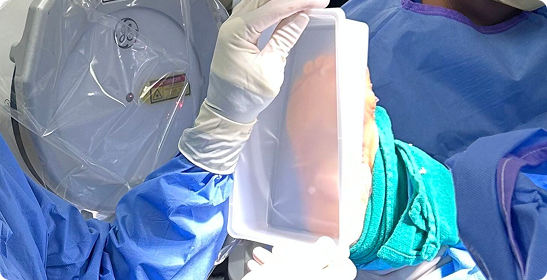
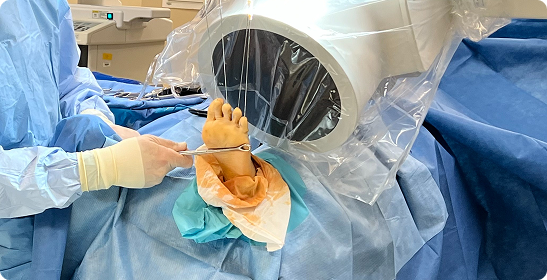
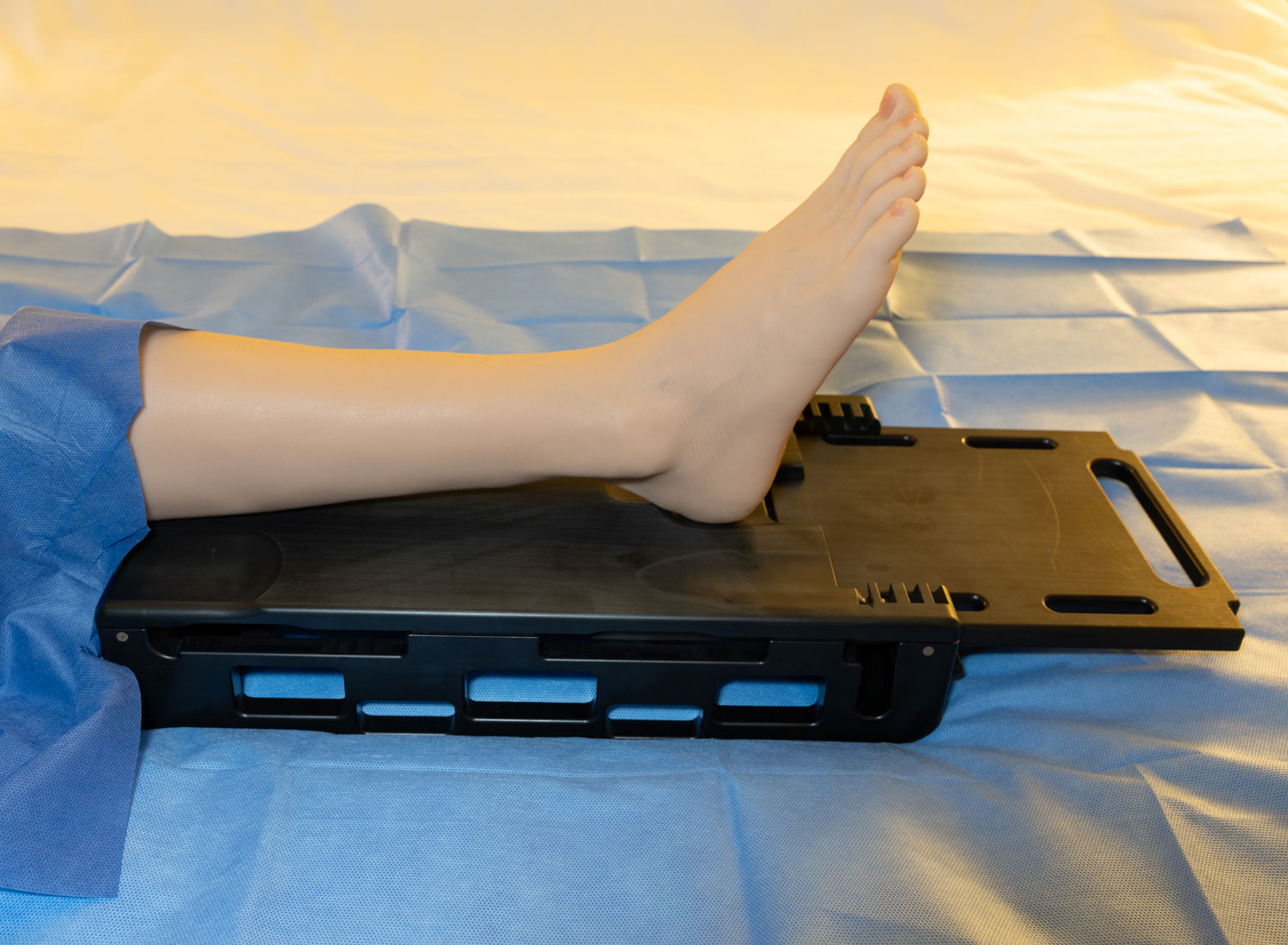
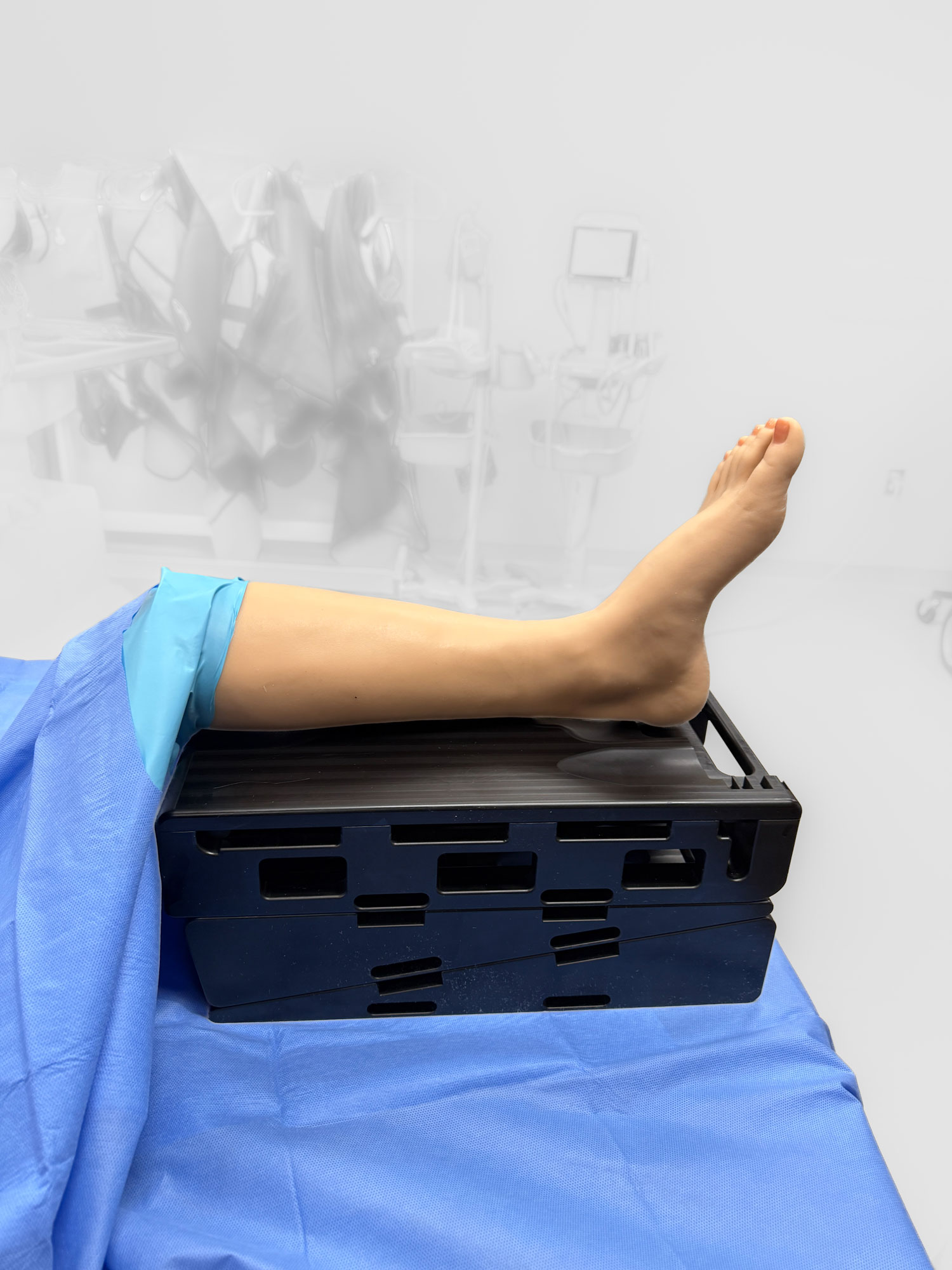
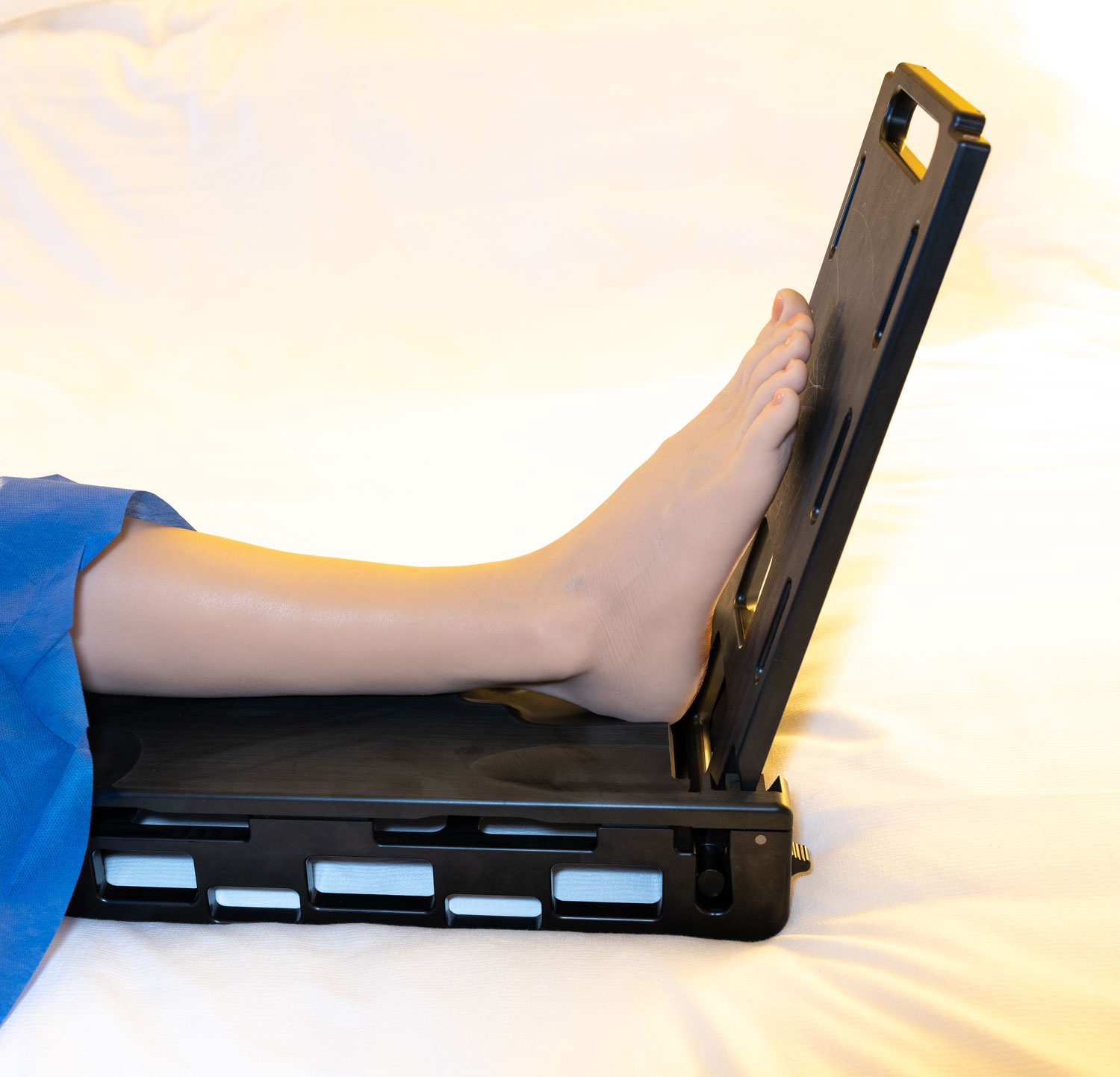
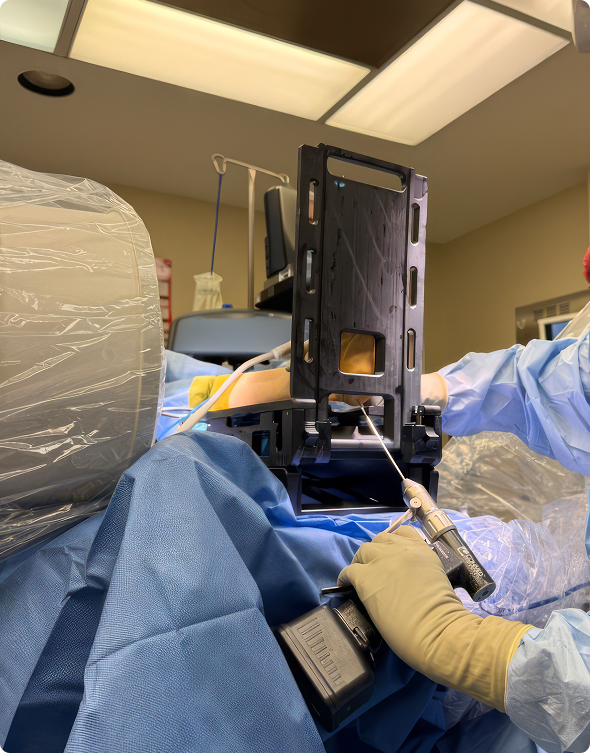
The Weight Bear platform allows a patient’s foot to remain stable throughout a case and allows for hands-free, self-supported loading for accurate imaging and consistent procedural positioning.
You’ve been improvising foot positioning and loading for years
Today’s foot and ankle operating rooms rely on techniques that haven’t changed in decades.
Manual positioning, improvised supports, and inconsistent loading create unnecessary variability during procedures that demand precision. Every adjustment depends on another person, making repeatable positioning difficult and reproducible imaging even harder.
When consistency matters improvisation shouldn’t be the standard
The solution
A platform designed to hold position for you
The Weight Bear maintains a stable, simulated weight-bearing position from the first image to the final fixation. No assistant holding the foot. No shifting between fluoroscopic shots. Just consistent positioning that lets you focus on the procedure.
The result of having The Weight Bear on your OR table is more reproducible workflow, cleaner imaging, and great confidence that every adjustment is made under the same loading conditions. Every case becomes more controlled, more repeatable, and less dependent on who happens to be in the OR that day.
Radiolucent construction keeps the device out of your images. Its fully autoclavable, reusable, and folds flat on the OR table, ready whenever you need it.
How it works
Three steps.
01
Place it.
The Weight Bear is placed on the OR table on top of the drape. Using the Weight Bear Accessory Wedges the patient’s foot remain stable in a bumped position throughout the case.
02
Load it.
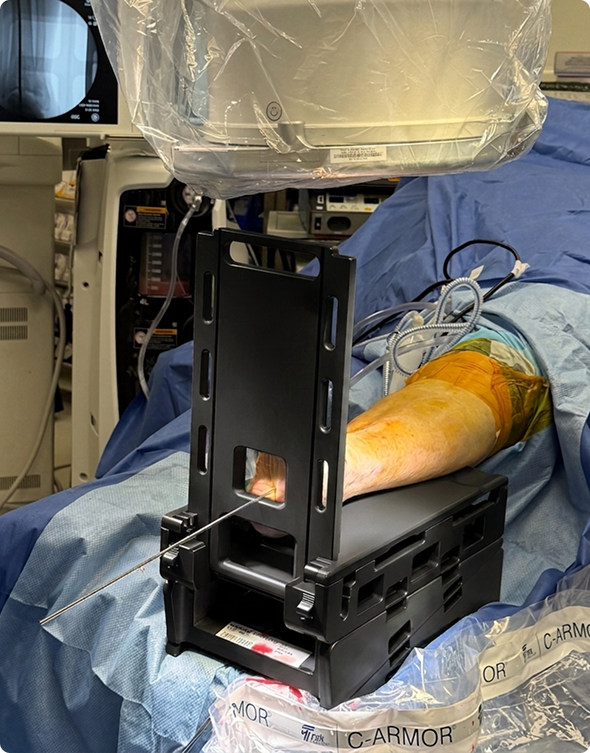
The Weight Bear’s retractable loading plate adjusts into four distinct loading positions…75 deg, 90 deg, 105 deg, 120 deg. And applies consistent loading in any of those positions.
03
Image and operate.
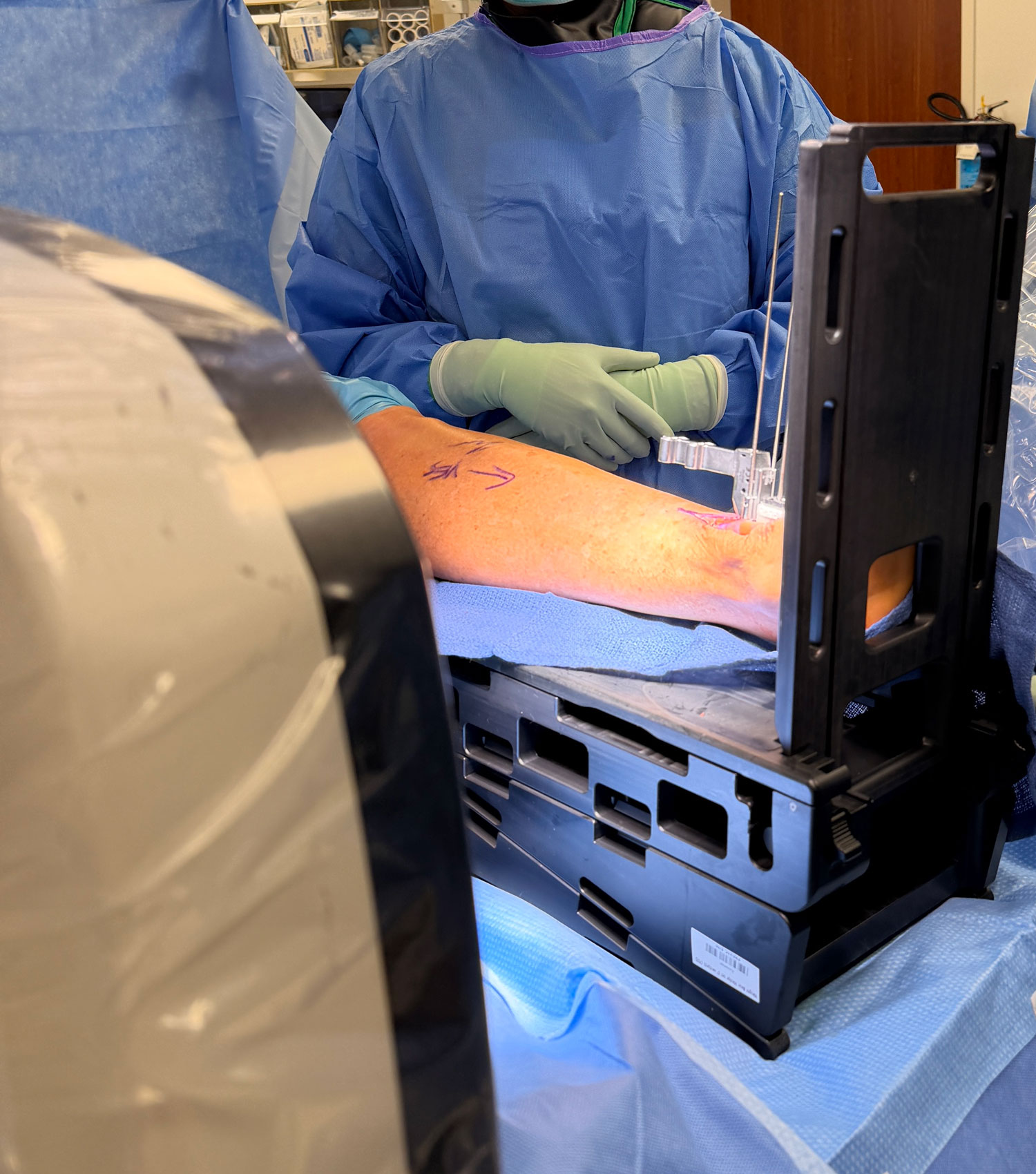
The Weight Bear’s load is not occupying your hands so you can continue your procedure with the patient’s foot in the loaded position and take consistent, reproducible x-rays allowing for improved workflow.
Place The Weight Bear on the OR after the patient’s leg is draped. Position the unit at the end of the OR table by itself or with the Accessory Wedges to create your ideal operative bumped position.
Hands-free loading
With the patient’s foot placed on The Weight Bear load the patient’s foot in one of four positions
Imaging
The patients foot remains in one stable position allowing for repeatable, consistent images throughout a case.
Laterals
The Weight Bear’s retractable loading plate contains two radiopaque pins that allow you to line up and target a true lateral image.
Maintain alignment
The design of The Weight Bear allows you to operate with the patient’s foot in a loaded position. Keeping the bones aligned in their congruent anatomic position.
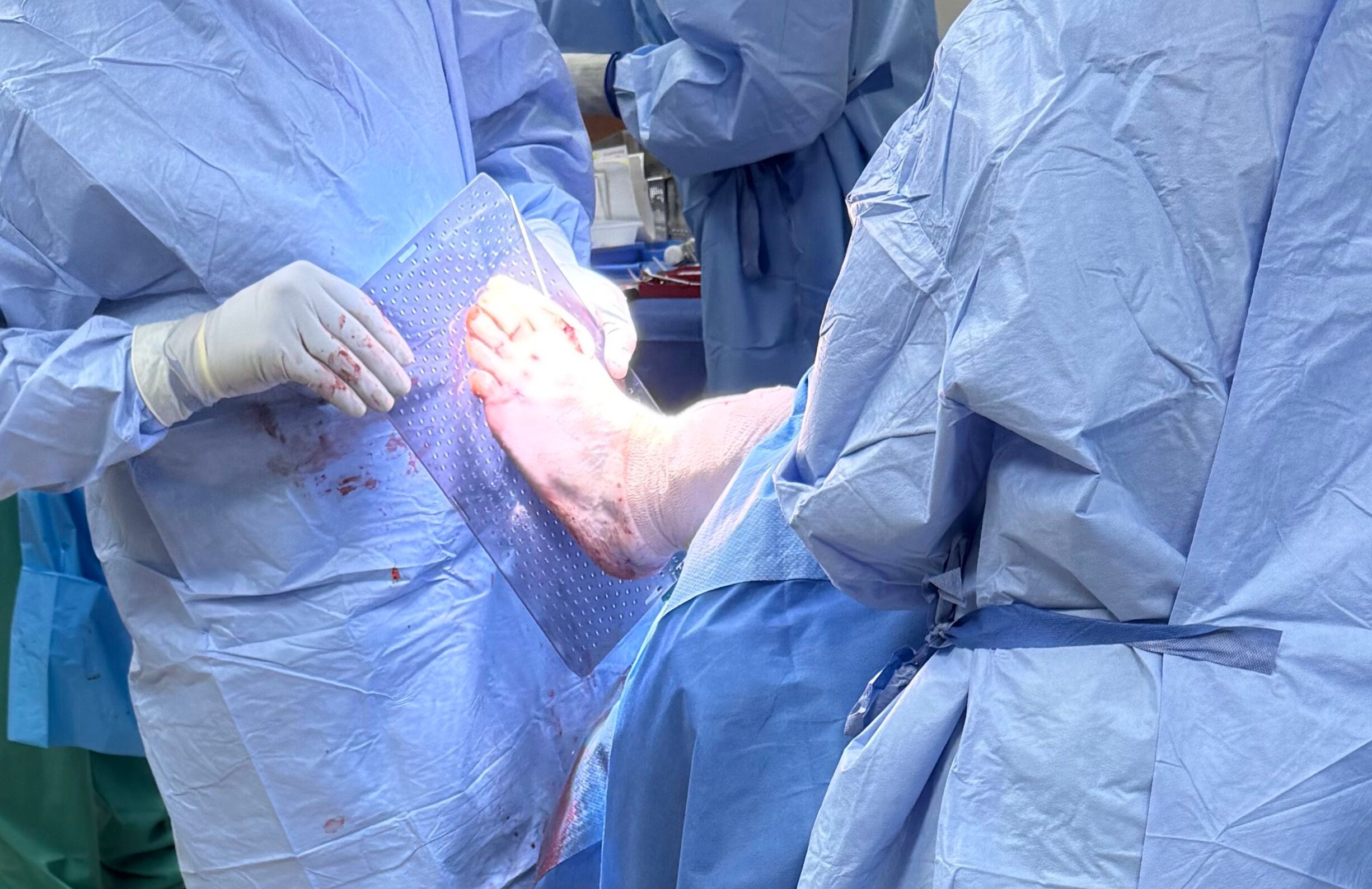
Surgical rear foot access windows
The Weight Bear’s loading plate contains two anatomically positioned access windows that allow you to maintain load and have clear access to the patient’s foot for procedures such as TTC nail and Flatfoot.
Order direct
Order The Weight Bear®.
Buy the platform directly for delivery in the US. One reusable reliable platform.
Add the Accessory Wedges for more flexibility and various bumped position options.
The device is not yet approved for sale outside of the US
In conversation
Why hands-free positioning belongs in foot and ankle surgery.
Founder Rich Adelson and Dr. Tom Chang sit down on LER Conversations to talk through the case for repeatable, hands-free positioning, where it came from, and what changes when the foot isn’t held by hand anymore.
Radiolucent construction
Patented
Validated for simulated weight-bearing CT
FDA registered
Class I device
Radiolucent construction
Patented
Validated for simulated weight-bearing CT
FDA registered
Class I device
See it work in your OR.
Request a demo and we’ll walk you through setup, loading angles, imaging, and the access windows for the cases you do most.